
How Long Do Clothes Really Last in Landfill?
We often think of clothing as temporary — worn for a season, a trend, or a moment in time. But what happens after we throw it away tells a very different story.
The truth? Most clothing outlives us.
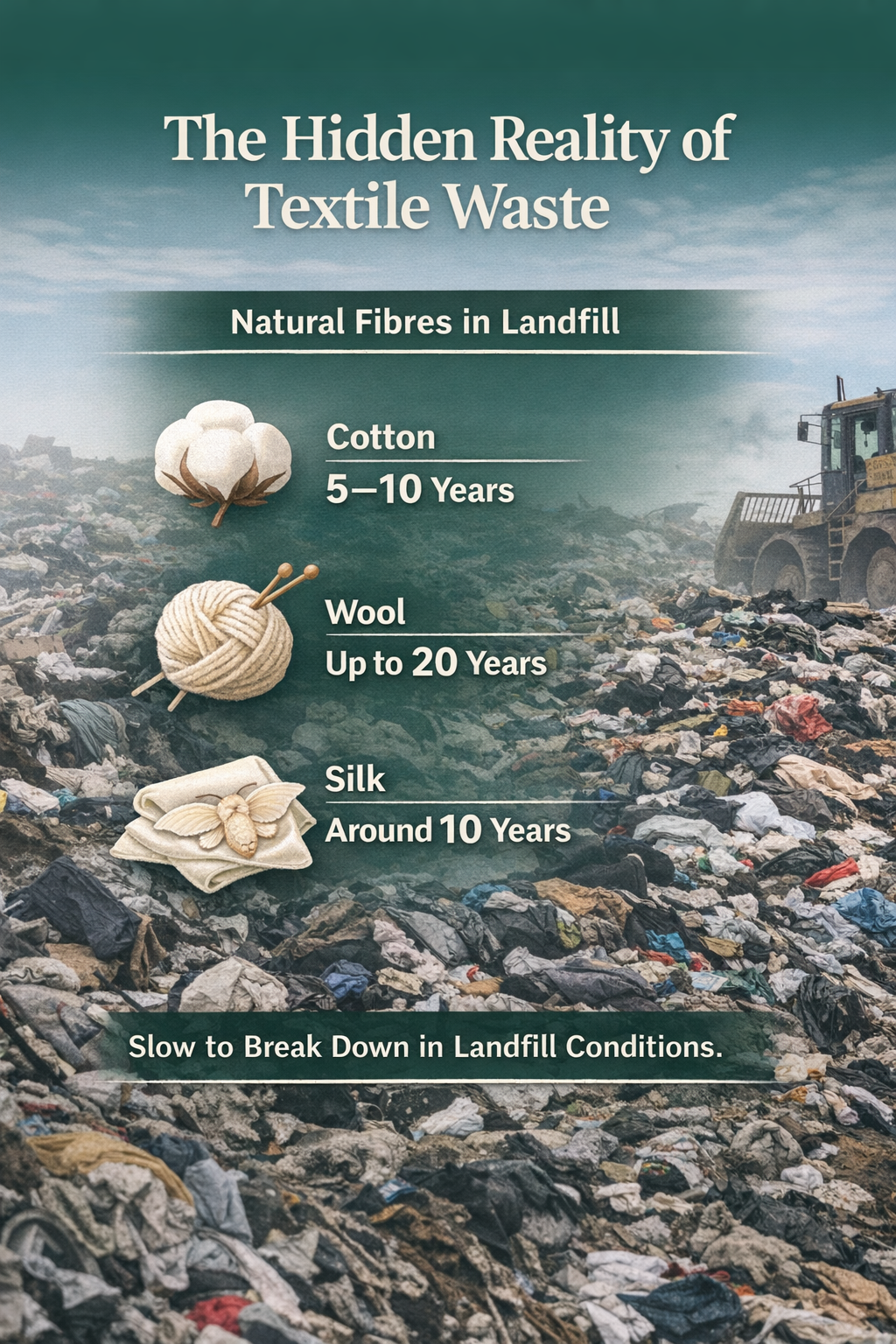
The Hidden Reality of Textile Waste
When garments end up in landfill, they don’t simply “break down.” Landfills are tightly compacted, low-oxygen environments. That means materials decompose far more slowly than we imagine.
Here’s what that looks like:
Natural Fibres (But Not So Natural in Landfill)
Cotton: 5–10 years
Wool: Up to 20 years
Silk: Around 10 years
While these fibres are biodegradable in ideal composting conditions, landfills are far from ideal. Limited oxygen and restricted airflow significantly slow decomposition.
Synthetic Fibres (Plastic in Disguise)
Polyester
Nylon
Acrylic
Spandex
These materials are derived from fossil fuels. In landfill, they can take 20 to 200+ years to break down — and even then, they don’t truly disappear. Instead, they fragment into microplastics that persist in our ecosystems.
And because most modern garments are blends (cotton-poly, elastane-mix, etc.), they become even harder to decompose or recycle effectively.
Why This Matters
The average garment is worn only a handful of times before being discarded. Yet it can remain in landfill for decades — even centuries.
That’s the disconnect.
At Project Emerald, we believe clothing should circulate — not accumulate. Extending the life of garments through resale, rewearing, and conscious purchasing dramatically reduces textile waste and keeps valuable pieces in use for longer.
Sustainability isn’t about perfection.
It’s about participation.
The Shift Starts With Us
Before discarding a garment, consider:
Can it be repaired?
Can it be resold?
Can it be donated responsibly?
Can it be repurposed?
Every garment kept in circulation reduces landfill impact and lessens demand for new production.
Clothes shouldn’t last 200 years in landfill.
They should last through many wardrobes.
